


MENINGIOMAS
OVERVIEW
A meningioma is a noncancerous and slow-growing tumor that develops in the covering of the brain (meninges). Small meningiomas and those without symptoms can be observed with periodic MRI imaging to monitor tumor growth. The optimal treatment for the great majority of symptomatic or growing meningiomas is maximal safe surgical removal. The selection of the type of surgical approach depends very much on the tumor location.
SKULL BASE MENINGIOMAS
Skull base meningiomas are the most challenging as they arise from the lining at the base of the skull where they are intimately related with critical nerves and vessels. It is extraordinarily important that these tumors are treated by very experienced surgeons with expertise in advanced skull base surgery techniques.
ENDOSCOPIC ENDONASAL APPROACH
The endoscopic endonasal approach (EEA) for treating meningiomas has unique advantages over traditional surgery:
1-Minimally Invasive Surgery:
The EEA uses the nostrils and nasal cavity as a natural corridor to the base of the skull, avoiding the need for skin incisions and cranial openings.
2-Early Tumor Devascularization:
The vascular supply to the tumor originates mostly from the base of the skull, and using the EEA, it can be interrupted before entering the tumor.
3-Direct Access to Tumor Origin:
The EEA provides direct access to the tumor origin without any manipulation of the brain, vessels, or cranial nerves.
4-Minimizing Complications:
A less invasive but more direct access with no manipulation of neural structures and early tumor devascularization produces better clinical results with shorter recovery times.
Frequently Asked Questions
What is a skull base meningioma? A skull base meningioma is a typically noncancerous, slow-growing tumor that arises from the meninges — the protective covering of the brain — at the base of the skull. These are the most challenging meningiomas because they grow near critical nerves, blood vessels, and brain structures. Common types include petroclival, sphenoid wing, tuberculum sellae, olfactory groove, and cerebellopontine angle meningiomas.
Do all meningiomas need surgery? No. Small meningiomas without symptoms can be observed with periodic MRI imaging to monitor growth. However, the optimal treatment for the majority of symptomatic or growing meningiomas is maximal safe surgical removal. The decision depends on tumor size, location, growth rate, and the patient's symptoms.
Can meningiomas be removed through the nose? Yes. Many skull base meningiomas, depending on their location, can be removed using the Endoscopic Endonasal Approach (EEA), a minimally invasive technique performed through the nostrils. This approach avoids skin incisions and cranial openings, allows early tumor devascularization, provides direct access to the tumor origin without brain manipulation, and typically results in shorter recovery times.
What are the advantages of the endoscopic endonasal approach for meningiomas? The EEA offers four key advantages: (1) minimally invasive — uses the natural nasal corridor without craniotomy; (2) early tumor devascularization — the blood supply can be interrupted before entering the tumor; (3) direct access to the tumor origin without any manipulation of the brain, vessels, or cranial nerves; (4) fewer complications and shorter recovery.
Why is surgeon expertise important for skull base meningiomas? Skull base meningiomas are intimately related with critical nerves and blood vessels. It is extraordinarily important that these tumors are treated by very experienced surgeons with expertise in advanced skull base surgery techniques. The choice between endoscopic endonasal, open skull base, or combined approaches — and the ability to execute them — directly impacts patient outcomes.
Does Dr. Fernandez-Miranda treat complex or recurrent meningiomas? Yes. Dr. Fernandez-Miranda is recognized as a world expert (top 0.05% by Expertscape) in skull base surgery and treats the most complex meningiomas, including recurrent tumors, petroclival meningiomas, and cases that other centers consider very high risk.
How do I get a consultation for a meningioma? You can request a consultation or second opinion by contacting Dr. Fernandez-Miranda's office through the form on drjfm.com or through Stanford Health Care. Please provide medical records and imaging studies. Your case will be carefully evaluated, with a recommendation typically within 24–48 hours. International patients are welcome.

MENINGIOMAS
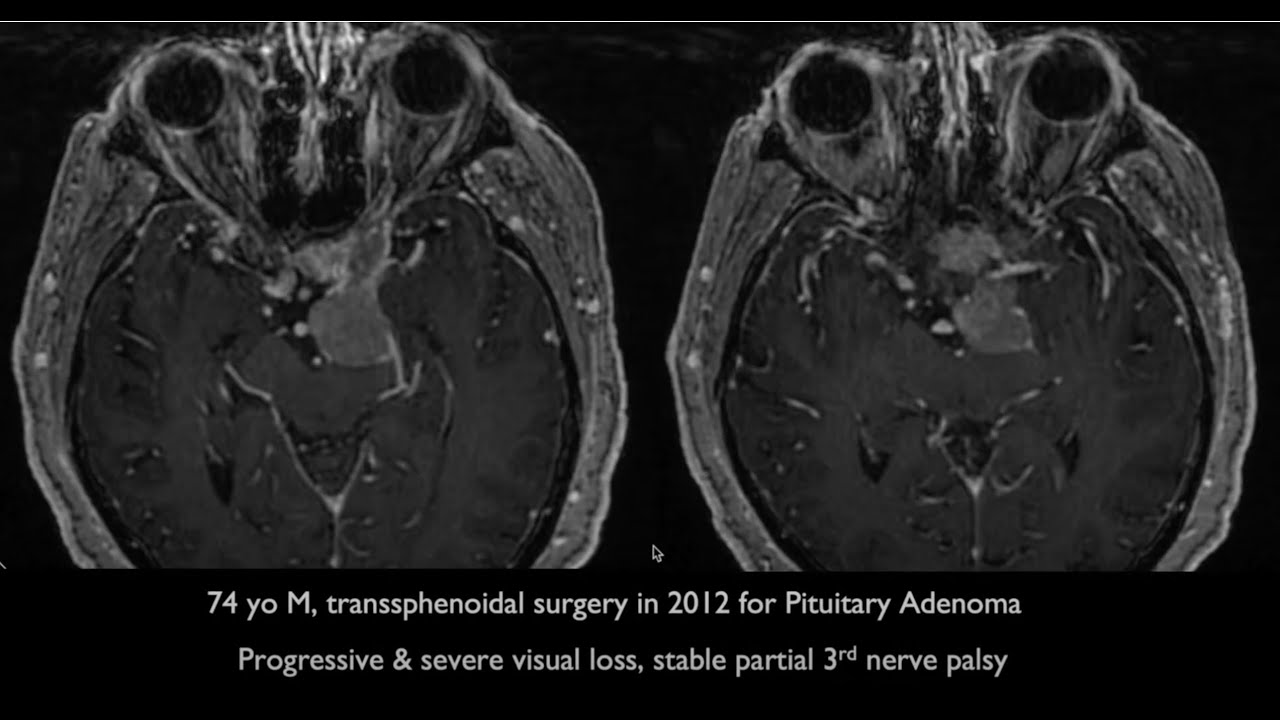
Syncronous Meningioma and Adenoma

Combined Transpetrosal Approach for Recurrent Petroclival Meningioma

Giant Petroclival Meningioma
CONTACT US FOR A CONSULTATION OR SECOND OPINION
We will do our best to contact you back within 24-48 hours
Please be ready to provide medical records and imaging studies
Your case will be carefully evaluated and will provide our recommendation and eligibility for surgical intervention